Azerbaijan GP
Not many race tracks can claim to be set out alongside a UNESCO World Heritage Site – but Baku City Circuit can.
Baku is one of the most fascinating cities that Formula 1® visits throughout a season of racing. The Azerbaijani capital blends old with new – and its street circuit seems to do the same, mixing ancient architecture with super-modern technology.
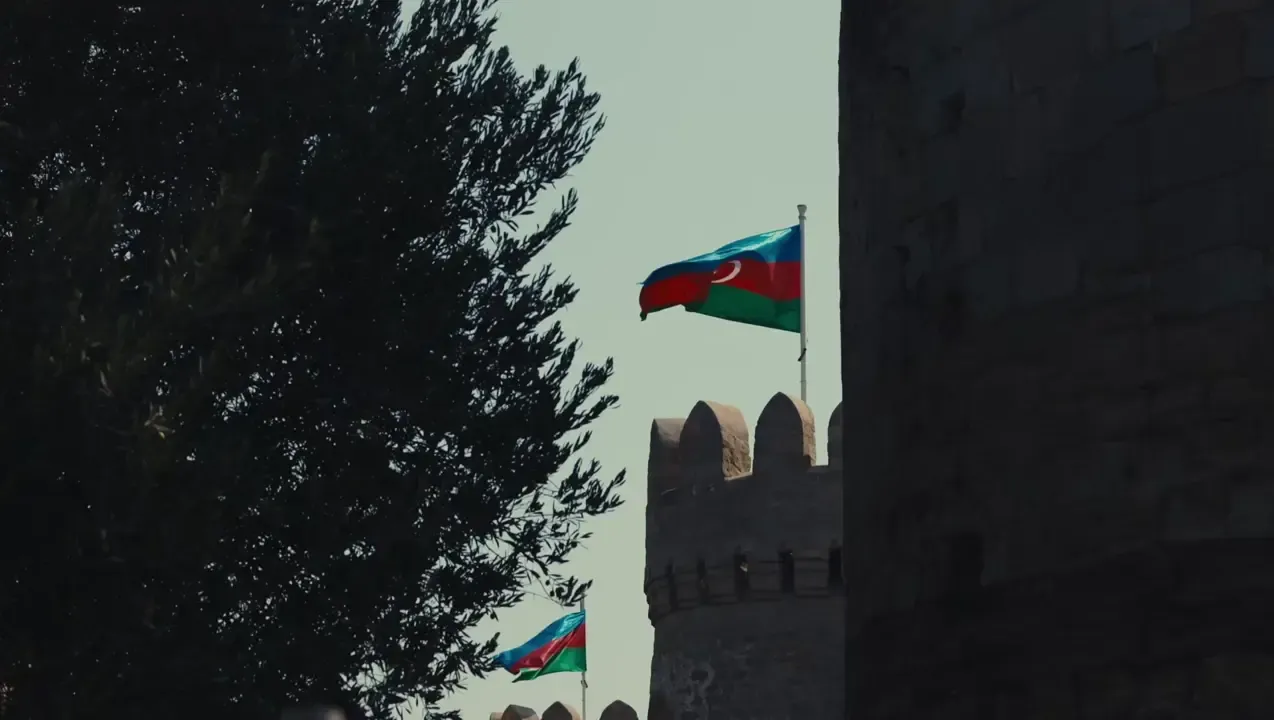
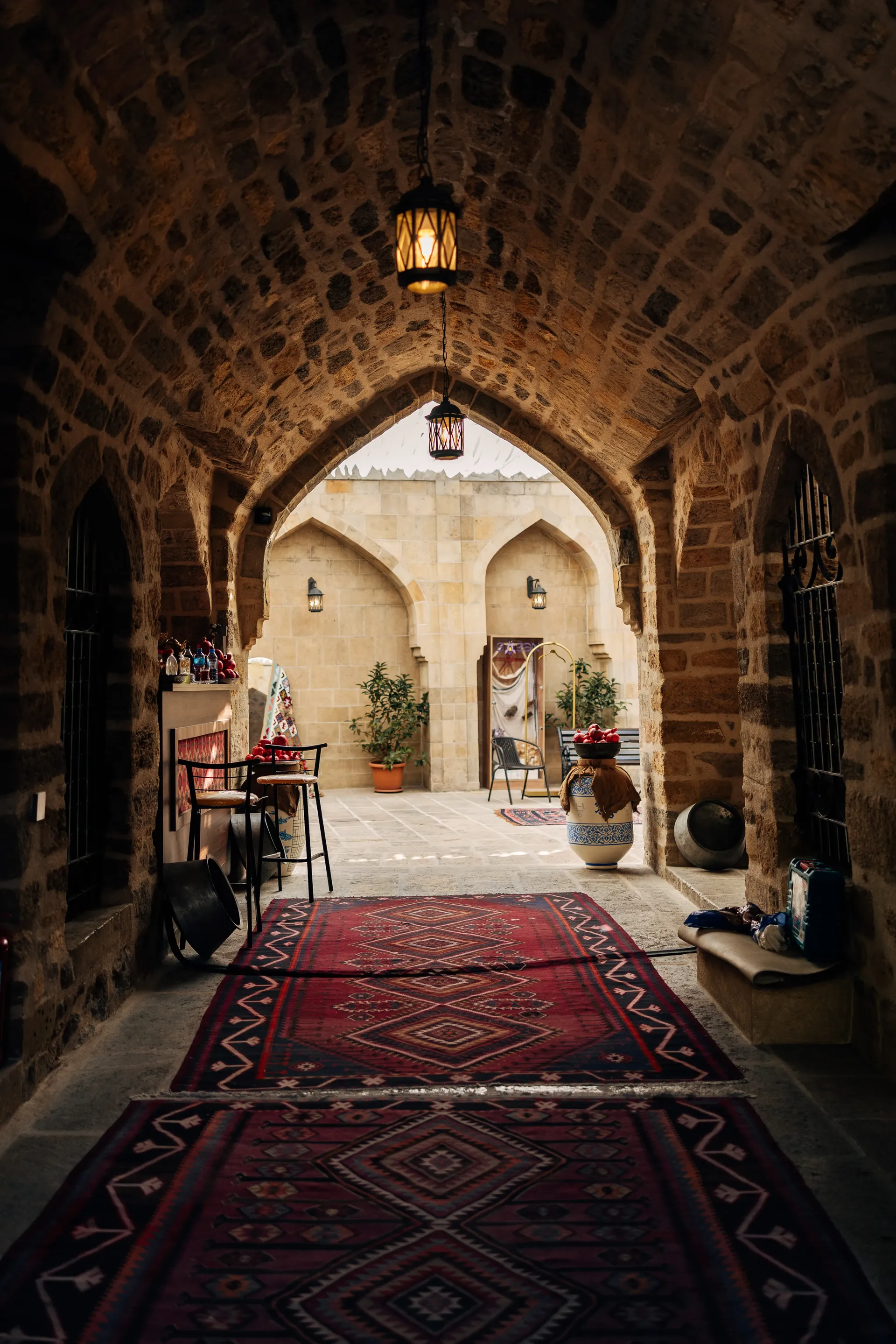
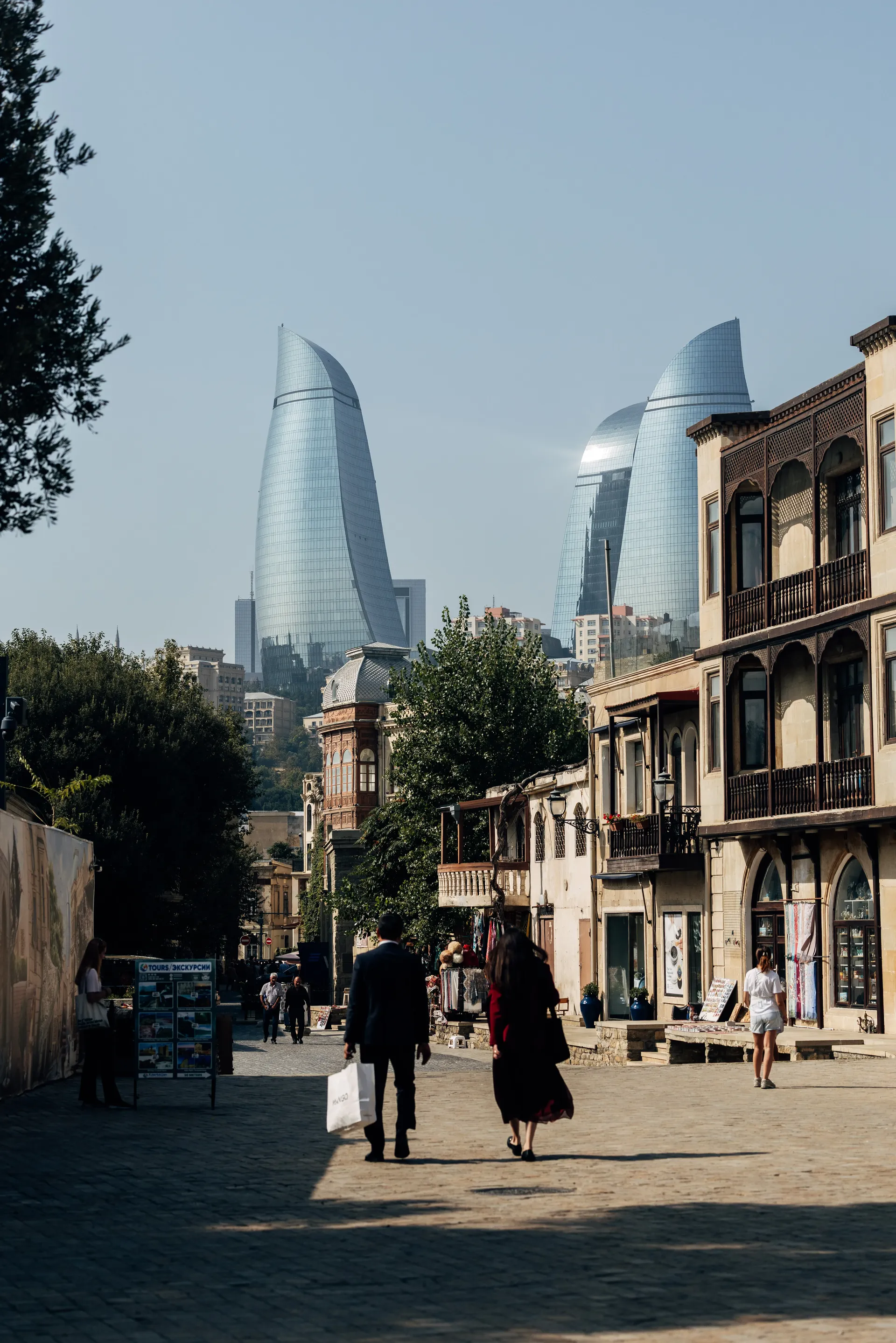
Baku’s Inner City, or Ichari Shahar, is enclosed by fortress walls and towers which have withstood the rise and fall of empires and date back to the 12th century. The UNESCO-listed Old City is home to some of the capital’s most significant landmarks, including the Maiden Tower and the Palace of the Shirvanshahs.
It even has an extensive network of underground passages, some of which were uncovered in 2008. A popular theory is that these tunnels once formed part of a route which led all the way to the mysterious medieval Sabayil Castle, which is now entirely submerged 300 metres offshore in the Caspian Sea.
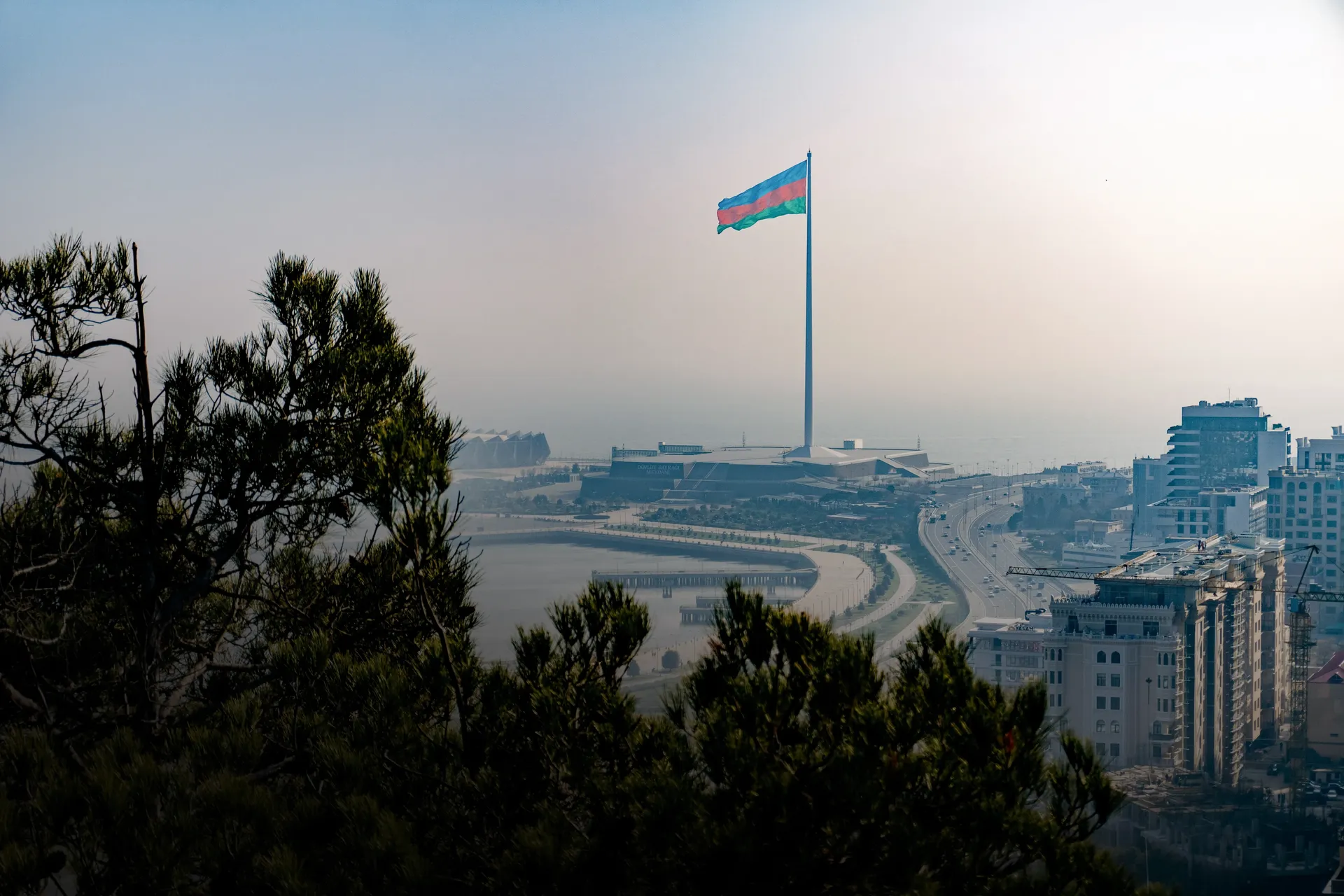
The geography of the city is just as interesting as its ancient structures. Baku’s name is thought to have come from a Persian expression for “wind-pounded city”, a reference to the fierce winds which sweep across the city, particularly near the waterfront. Baku itself sits 28 metres below sea level which, for a city that sits on the coastline of the Caspian Sea, is a rather impressive feat. It is the world’s lowest-lying national capital.
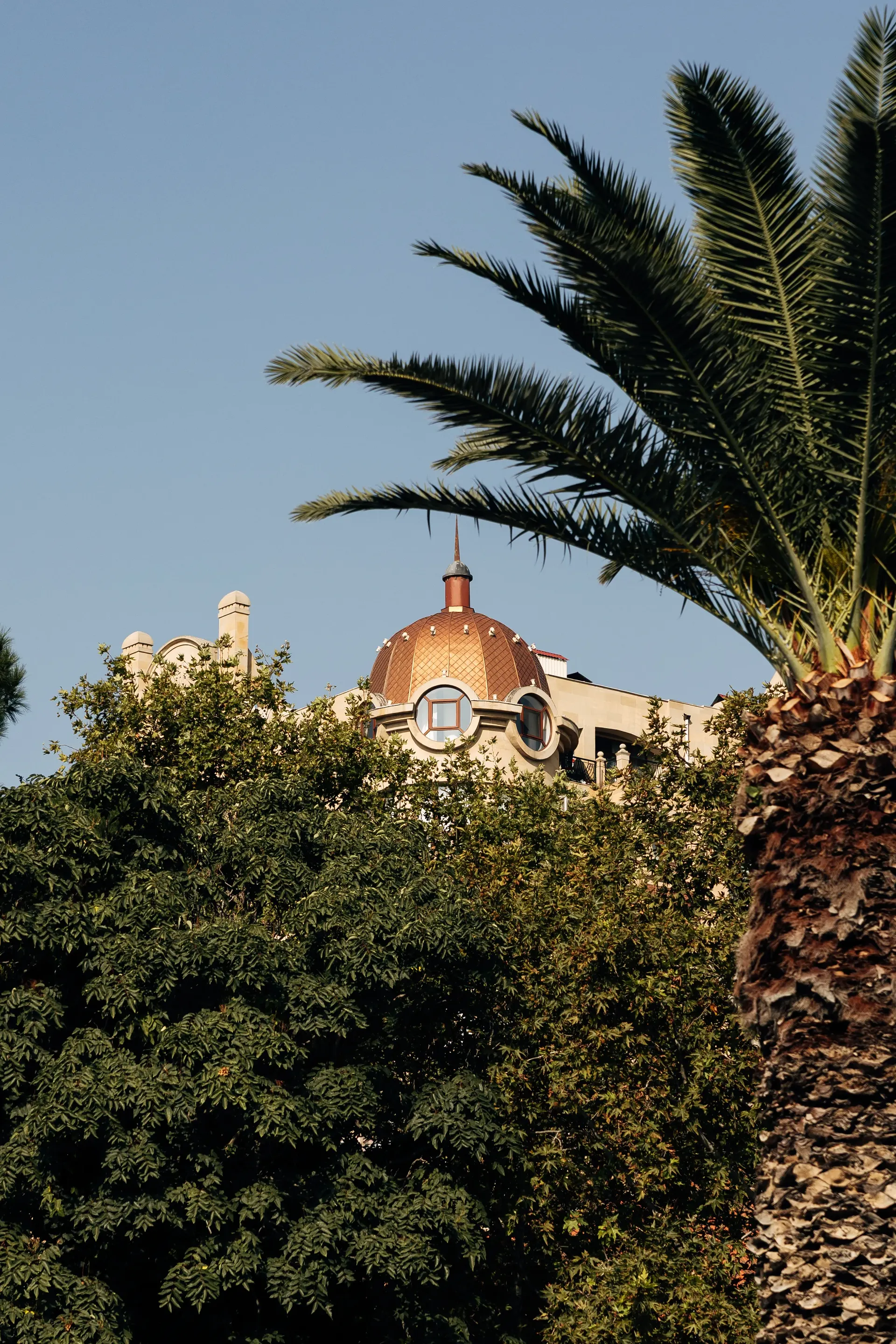
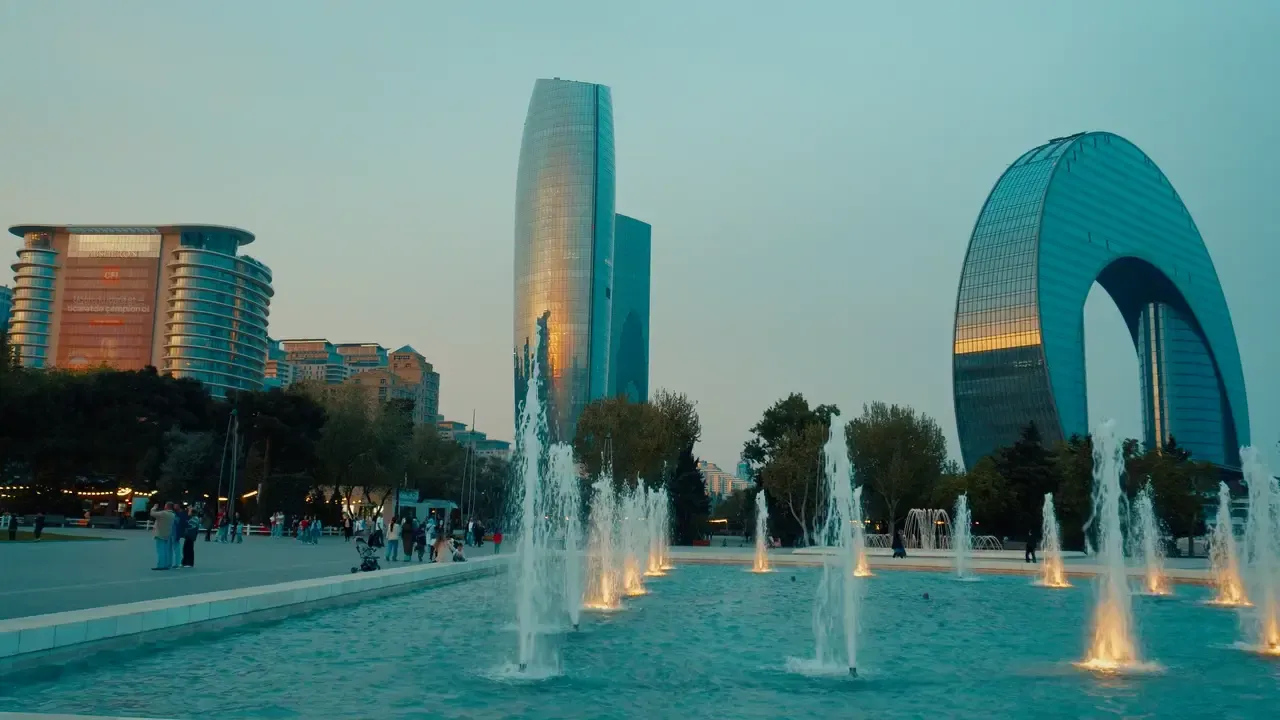
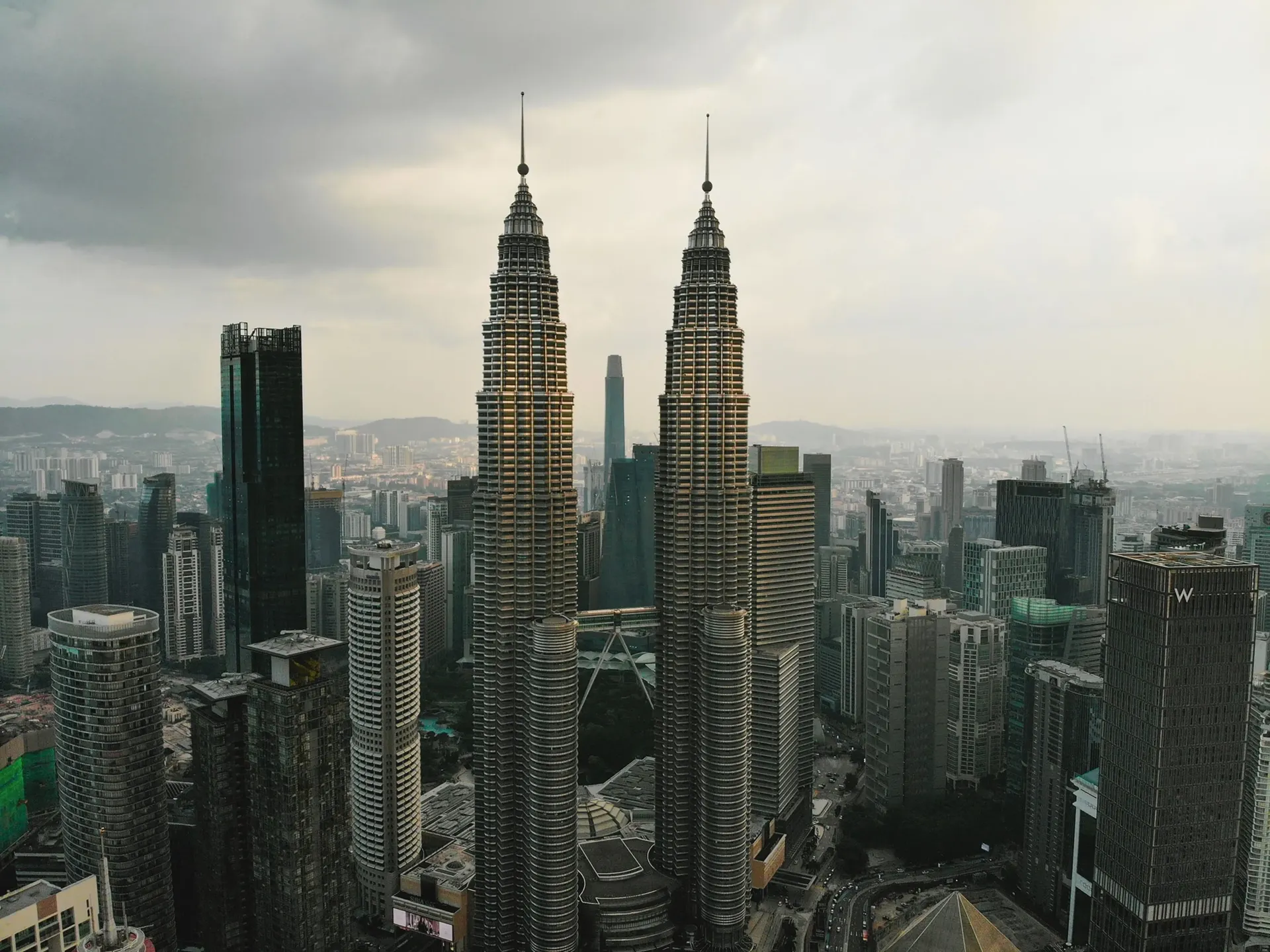
The contrast between Baku’s historic Old City and its newer constructions, like the modern Flame Towers and the Heydar Aliyev Centre, is a sight to behold – just like the city’s preparations for Formula 1®’s annual visit.
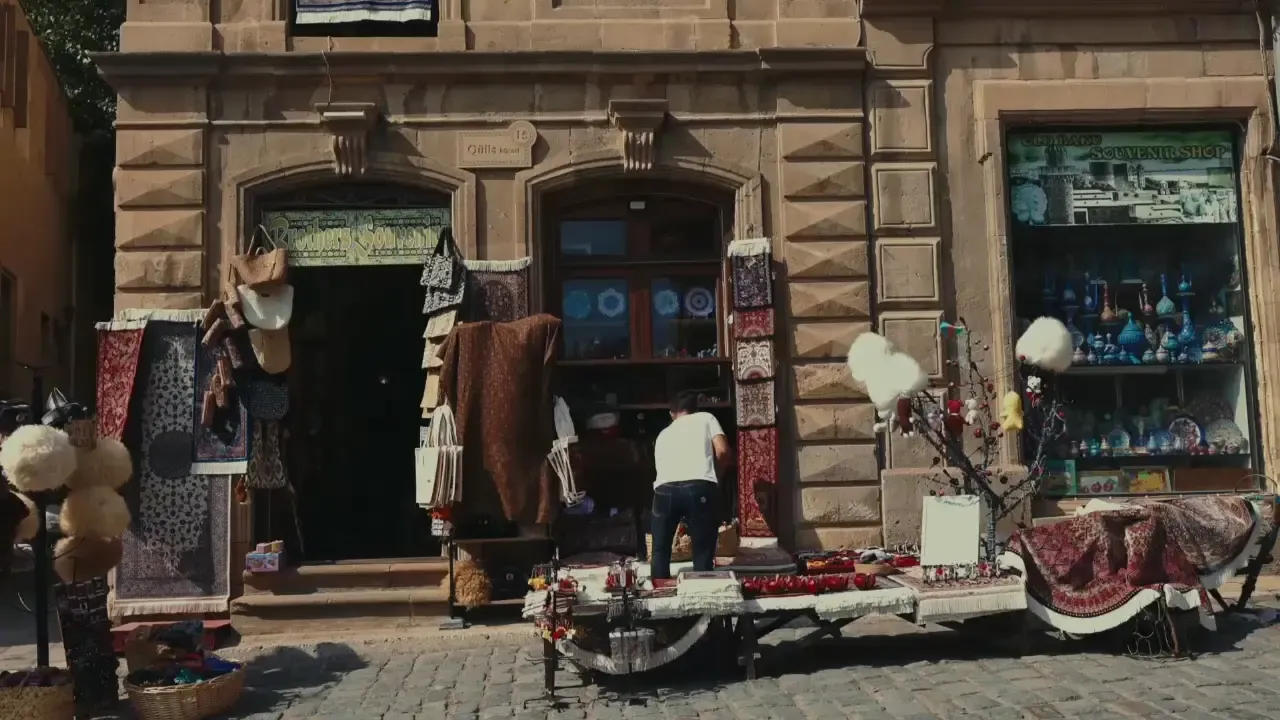
Each year, thousands of workers come together to transform Baku’s bustling city centre into a 6km-long racing circuit – one of the longest on which F1® races. With over 2,000 engineers, technicians, installers and logisticians involved in the construction and installation work, setup work takes somewhere in the region of six months.
Previously completed by international contractors, the process of preparing Baku City Circuit is now carried out entirely by local companies. The paddock and pit lane complex, which is set out in front of the imposing Government House, is the first to be constructed as its infrastructure takes the longest to prepare.
What becomes the main 2.2km-long straight is usually a main road open to six lanes of traffic. Baku on a regular day makes the rush to Turn 1 in the Azerbaijan Grand Prix look like child’s play! Such is the hectic nature of the area in its everyday existence, setup work is carried out mostly at night to keep disruption for locals to a minimum.
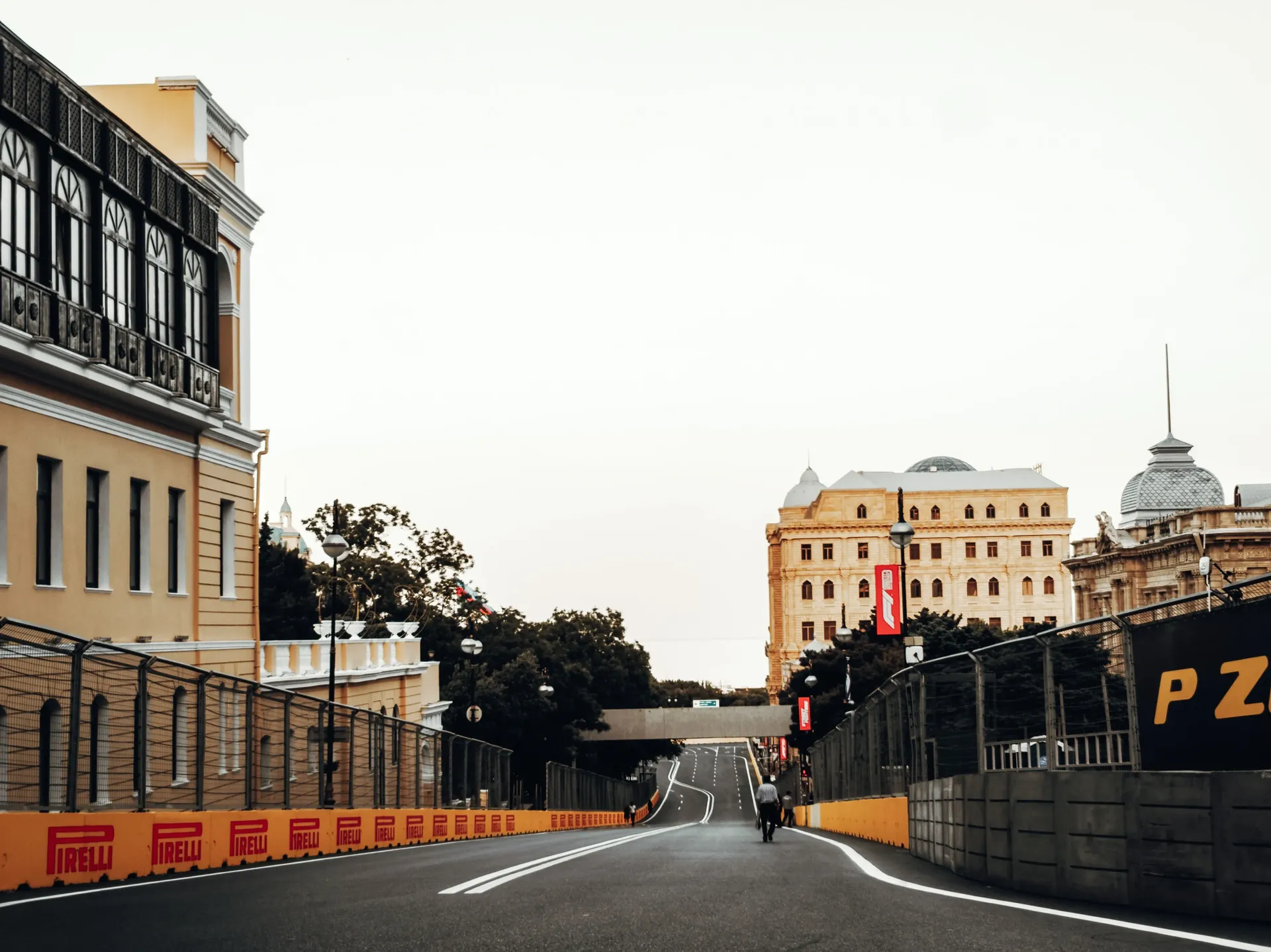
Similarly, the sections between Turns 6 & 7 and Turns 19 & 20 are actually part of one road in its everyday use, open to three lanes of traffic in each direction. Concrete blocks down the middle separate this section of track for the event but are not usually in place for the rest of the year.
From there, temporary grandstands – which have expanded in capacity in recent years – plus barriers and catch fencing all need preparing ahead of race weekend. 1,500 staff, 2,000 volunteers and 1,400 marshals join the workforce when the Grand Prix festivities properly begin.

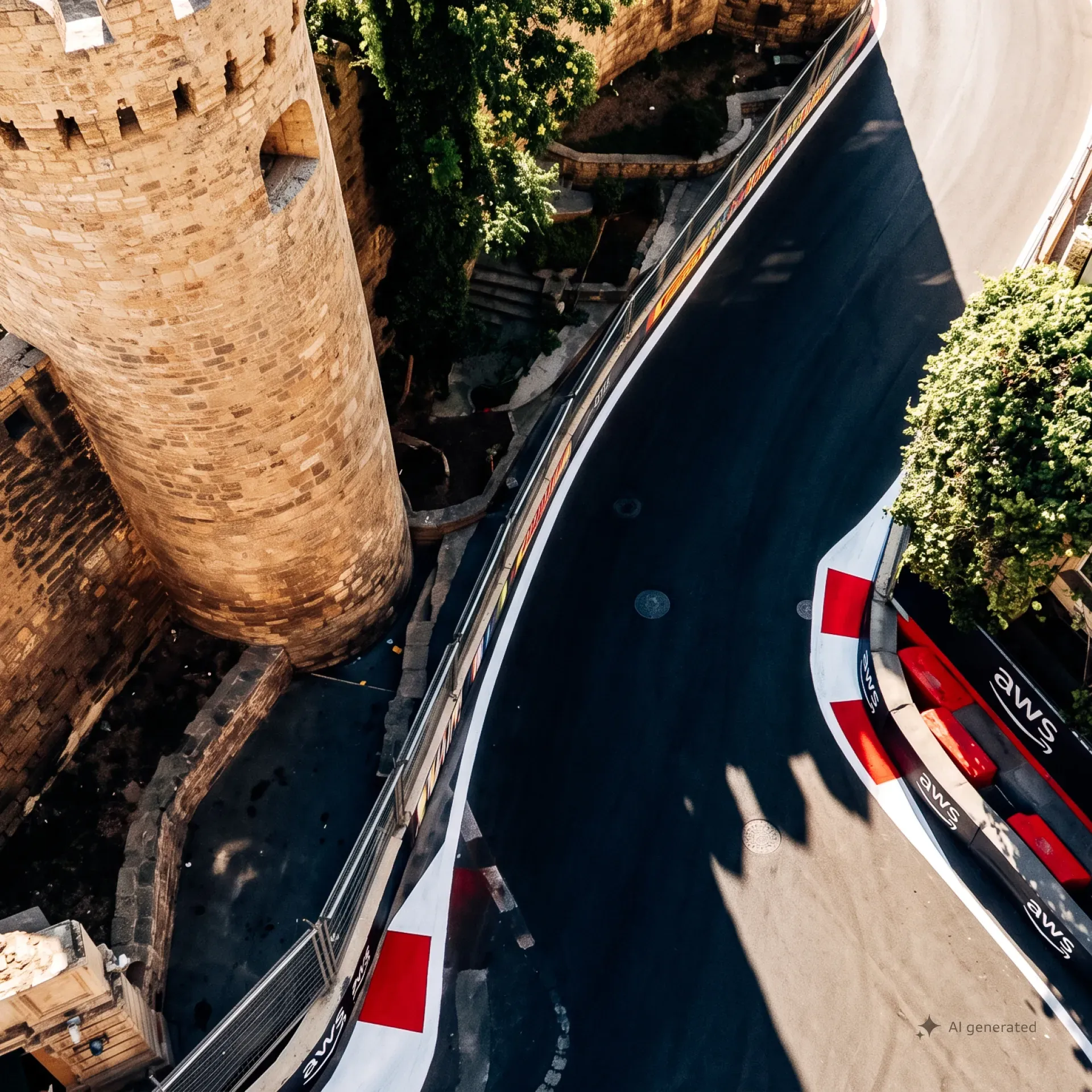
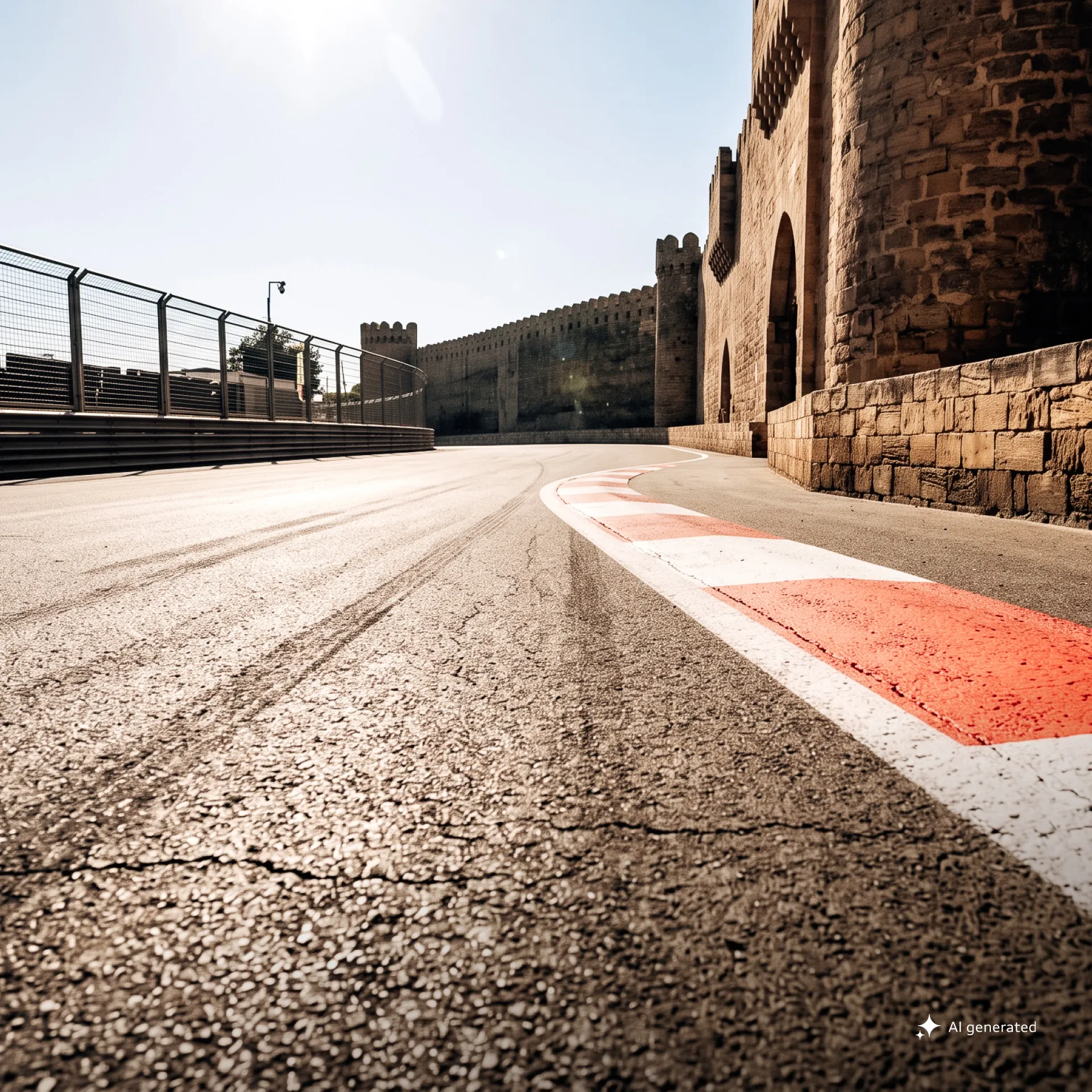
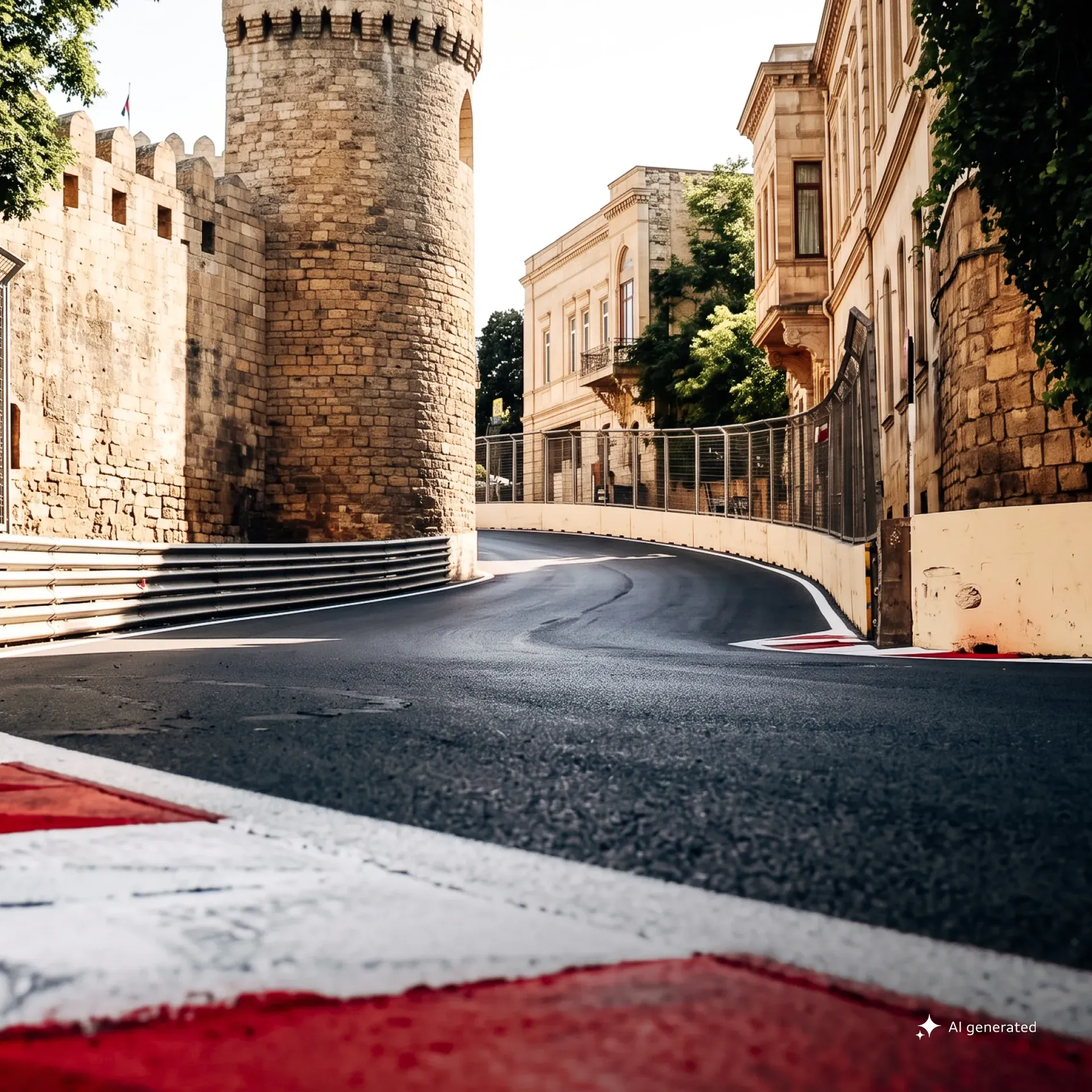
Nowhere is Baku’s fascinating blend of old and new more visible than through the Old City. Here, the cutting edge of motorsport races alongside a 12th-century section of the city, lined by ancient defensive walls.
The Maiden Tower is one of the most recognisable landmarks beside the circuit. The 29-metre-tall monument, which houses a museum exploring Baku’s evolution, sits close to the track and provides a spectacular vantage point for race fans on Grand Prix weekend.
Elsewhere, the run between Turns 8 and 10 is a particularly impressive complex. Turn 8 is the narrowest corner on the entire Formula 1® calendar, with a width of under eight metres. Eyeing the needle between the enclosed walls, it’s a corner at which plenty of drivers have run out of luck in the past.
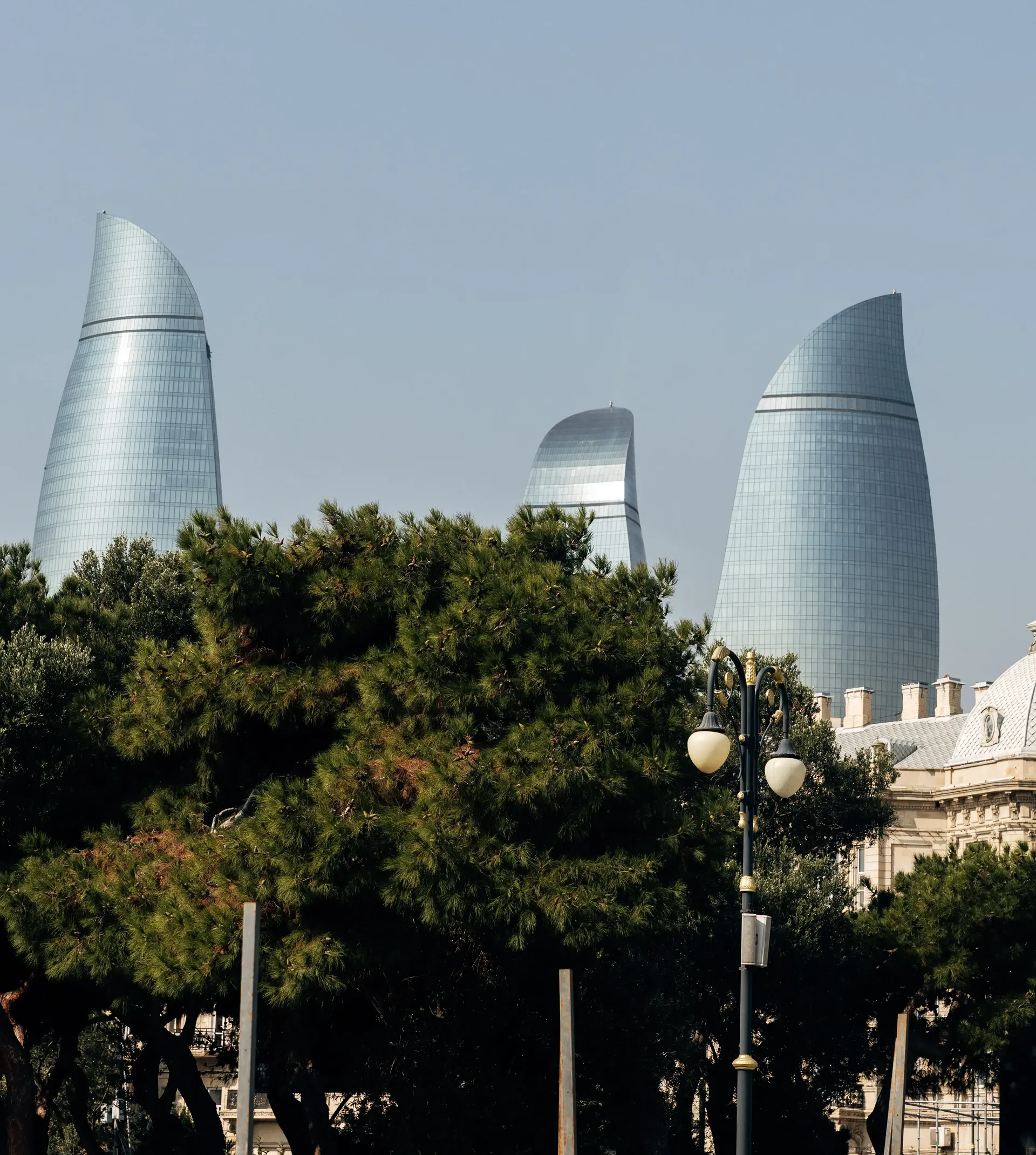
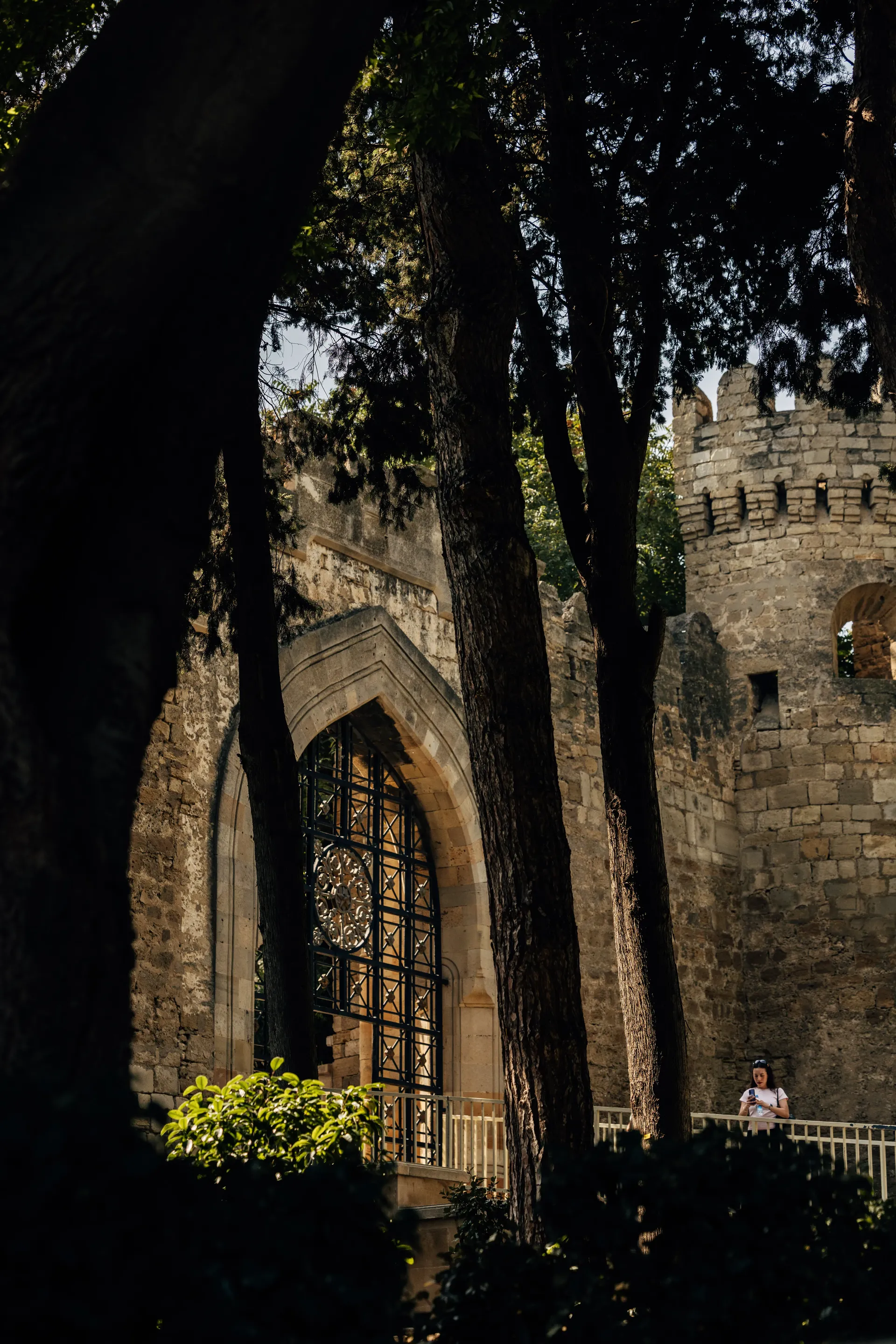
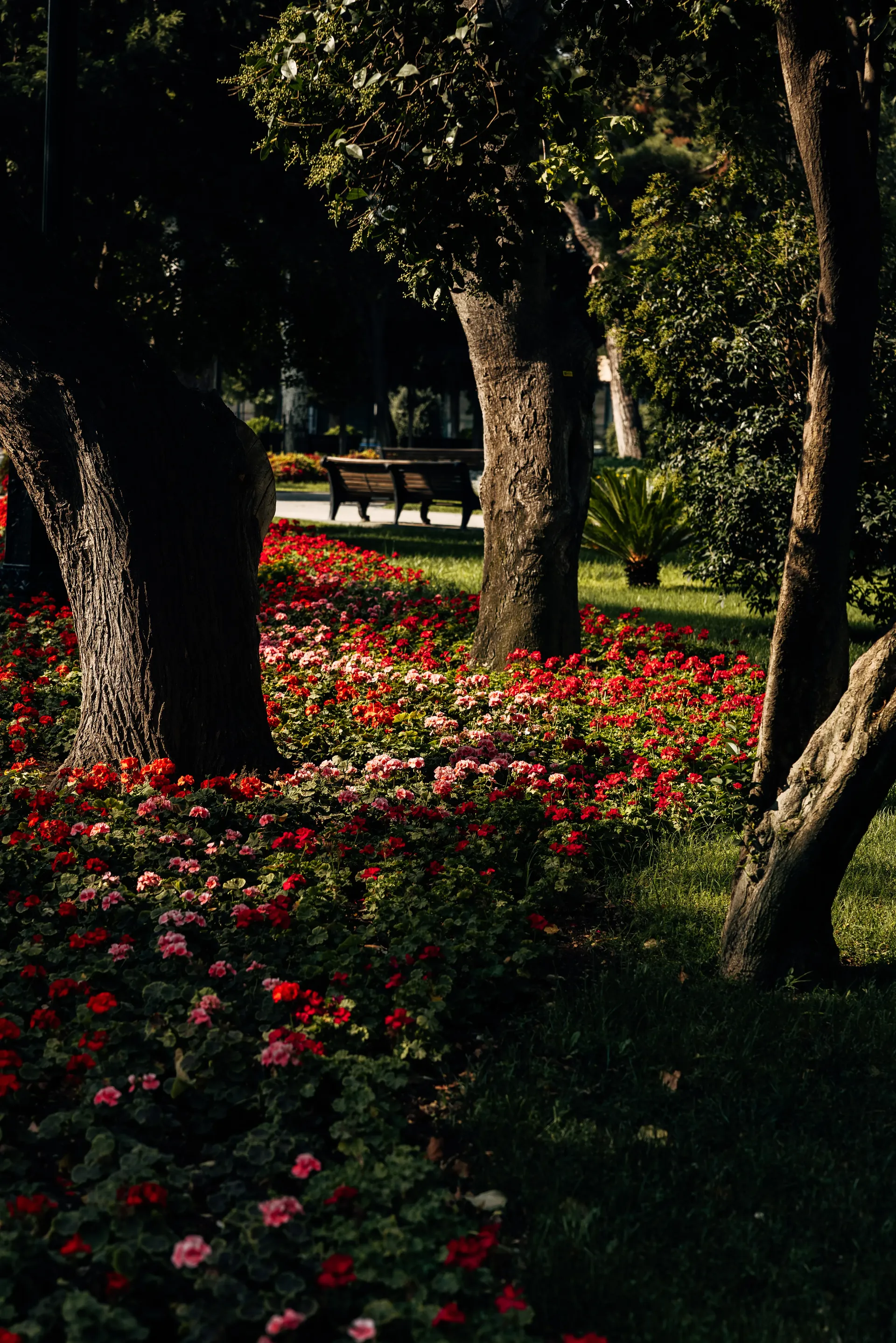
This section of track has a secret lying right underneath it. The asphalt in this sector is temporary. It is laid on top of centuries-old cobblestones. A protective layer has to be put upon the cobbles before the smooth surface on which F1® races is put down. The roadworks were controversial when they were first carried out ahead of Baku’s debut for the 2016 European Grand Prix. Now, it’s a regular part of the race weekend preparations.
Incorporating this section into the circuit is no easy feat – it’s here that the transformation between race week and a normal week in the city is most apparent. Aside from the resurfacing work, metal barriers are placed in front of the medieval walls to protect both them and the cars from damage as they run up the hill.
Some shops in this area have their entrances blocked by the barriers and additional protection is added to the storefront windows, to guard against damage from debris. Many of the shops remain open using alternative access points and their owners claim to have better close-up views than even the most expensive VIP tickets.
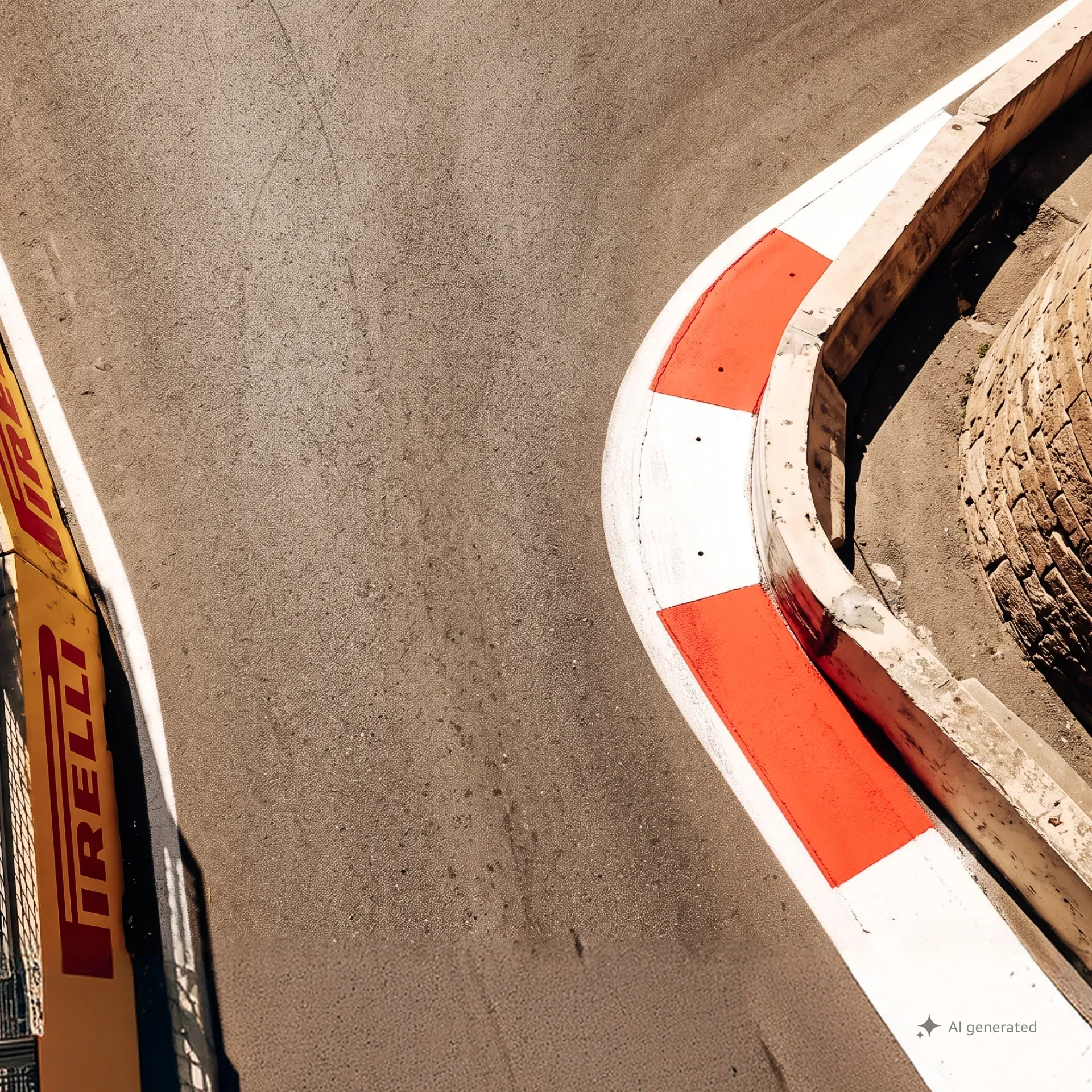
Like any Formula 1® circuit, packing up is a much quicker process than setting up. Come Tuesday morning, on most of the city streets, there’ll be little evidence around the city that Formula 1® had descended on Baku over the weekend aside from the occasional painted kerb, marks on road surfaces from lock-ups and lingering concrete barriers.
The start/finish straight is a little different – while the paddock building and event signage will remain in place for a while, the road which forms the pit straight is open to cars like any normal day. On this particular commute, however, with the surroundings, it feels more like driving on a race track.
The temporary grandstands take a little longer to deconstruct and some sections of fencing are more difficult to pull to pieces. But soon they will be taken into storage locally, before being brought out just six months later as the entire process begins again.
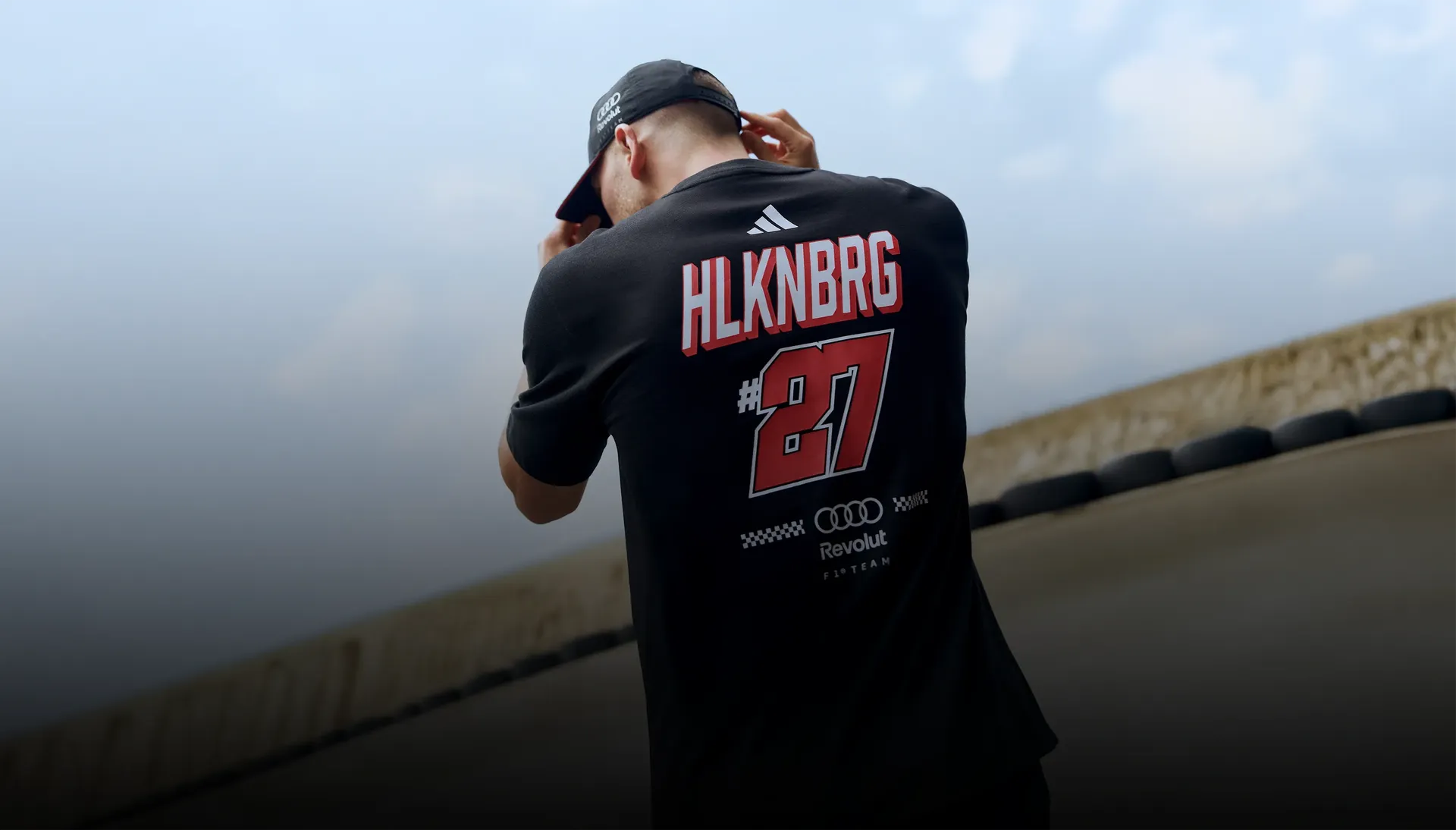
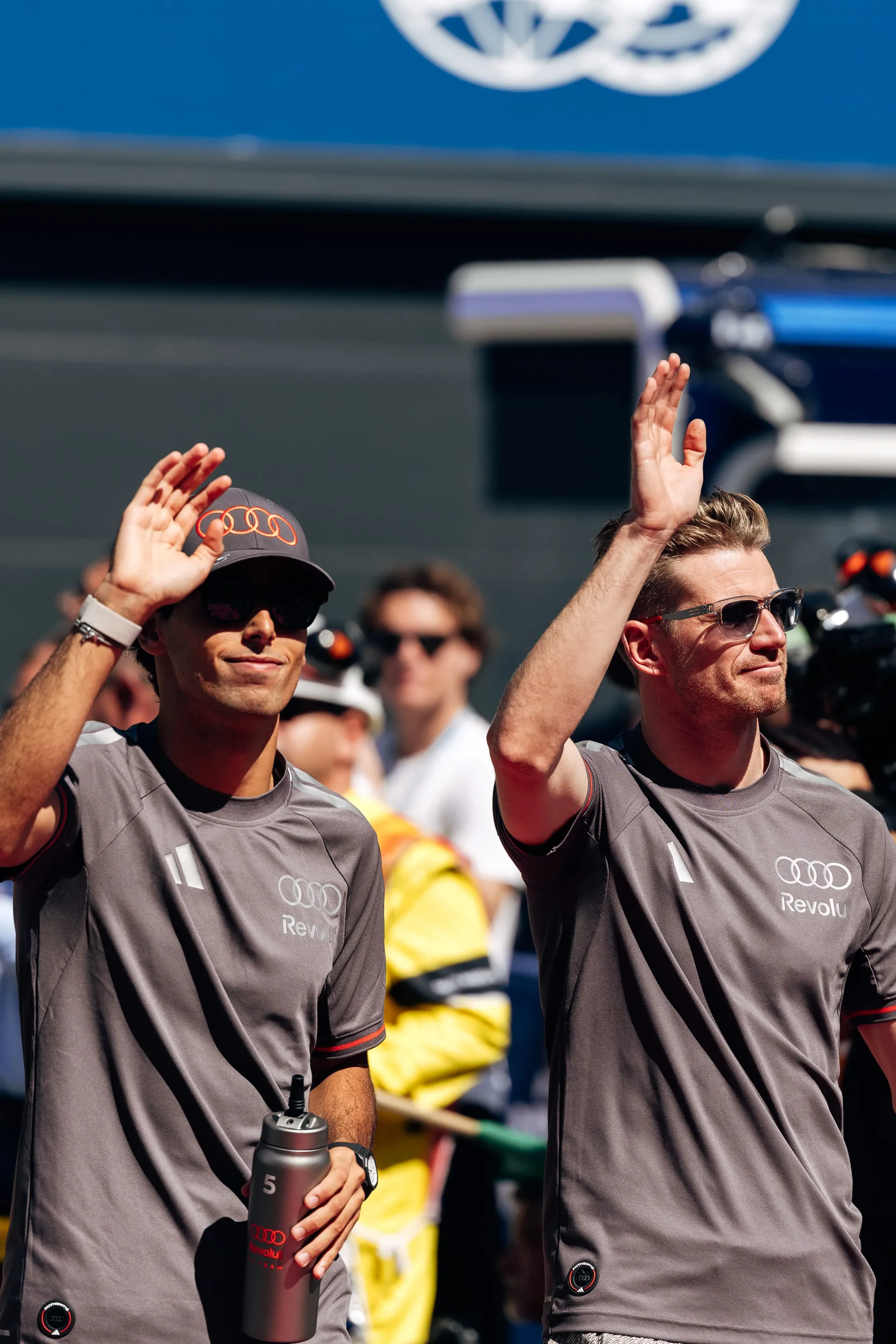
Get behind Nico and Gabi with the adidas x Audi Revolut F1® Team Graphics Pack.
Azerbaijan GP
Azerbaijan GP
Azerbaijan GP
2027 Season
All for One
DDP
Spanish GP
Spanish GP
Spanish GP
Spanish GP

Spanish GP
Audi(o)
Spanish GP
Spanish GP
Italian GP
Italian GP
Italian GP
Italian GP
2026 season
Italian GP
Italian GP
All for One
Dutch GP
Dutch GP
Dutch GP
Dutch GP
Dutch GP
Dutch GP
2026 Season
F1® Insights
DDP
Season review
Interview
All for One
Breaking News
Hungarian GP
Hungarian GP
Hungarian GP
Hungarian GP

Challenge
Hungarian GP
Hungarian GP
Belgian GP
Belgian GP
Belgian GP
Belgian GP
Belgian GP
Belgian GP
Belgian GP
All In
Nico vs. Gabi
View on the season
British GP
British GP

British GP
British GP
British GP
British GP
British GP
British GP
Austrian GP
Austrian GP

Austrian GP
Austrian GP
Austrian GP
Austrian GP

Community exklusive
Austrian GP
Austrian GP
Monaco GP
All for One
Barcelona GP
Barcelona GP
Barcelona GP
Barcelona GP
Barcelona GP
Barcelona GP
Barcelona GP
Barcelona GP
Barcelona GP
Barcelona GP
Monaco GP
Monaco GP
Monaco GP
Audi

The Flying Mantuan
Hospitality

Monaco GP
Monaco GP
Monaco GP
Canada GP
Canada GP
Canada GP
Canada GP

DDP
Canada GP
Canada GP
Podcast
Miami GP